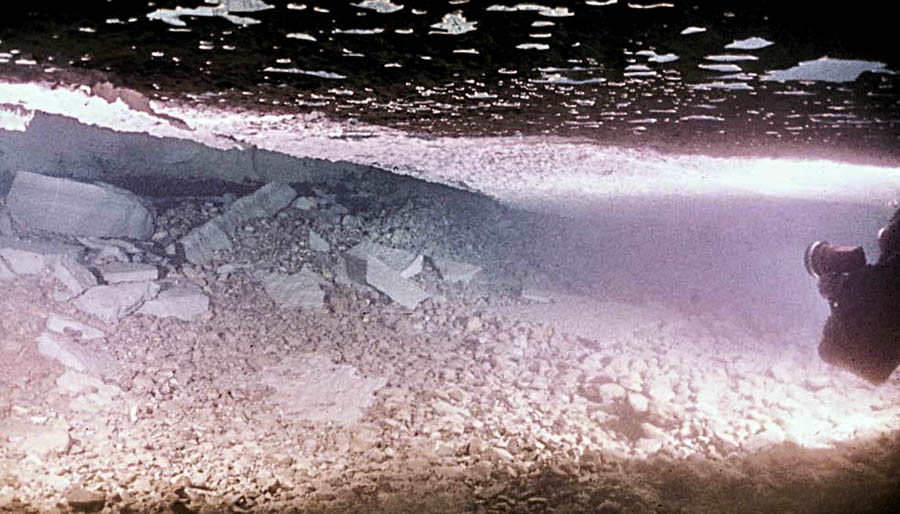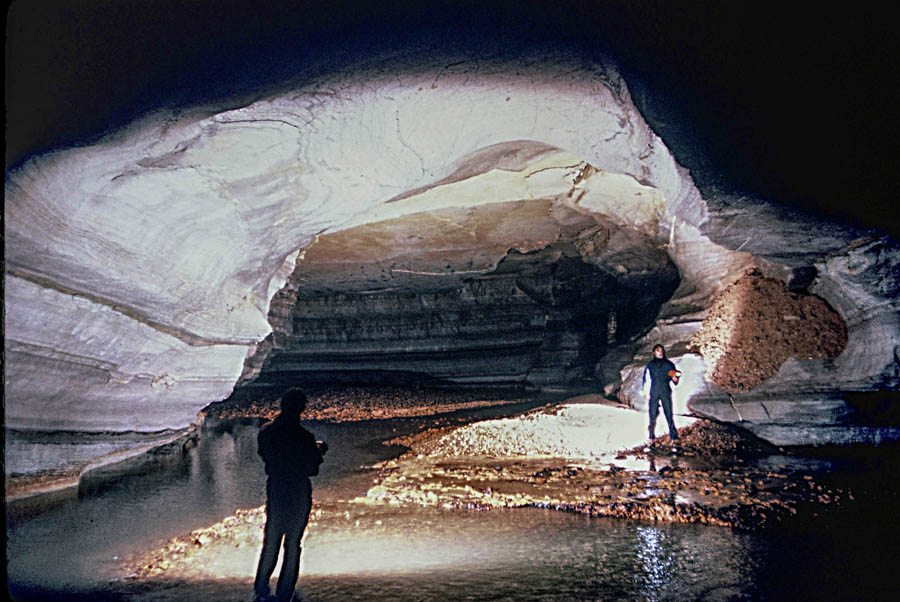
In the early 1970s, underwater cave photography wasn’t a discipline—it was an experiment unfolding in real time. Every dive was a test, every image a gamble. Before digital sensors, autofocus, or dependable underwater electronics, photographers had only mechanical cameras, a handful of flashbulbs, and a stubborn determination to bring back proof of what they had seen in the dark.
It was less an art form and more an act of invention.
Learning in the Dark
Most explorers didn’t begin with specialized gear. They started with whatever they could carry into the water—simple point‑and‑shoot cameras, often without flash. In the absolute blackness of a submerged cave, these cameras were little more than dead weight.
Some divers tried sealing their cameras inside plastic jars to keep them dry. It worked, technically. But without light, the film recorded nothing but darkness. The first real breakthrough came when consumer cameras with flashcubes appeared. Suddenly, air-filled chambers beyond flooded passages could be photographed. But underwater, the cave still swallowed every bit of light.
The darkness was absolute, and it demanded more.
When Purpose-Built Gear Arrived
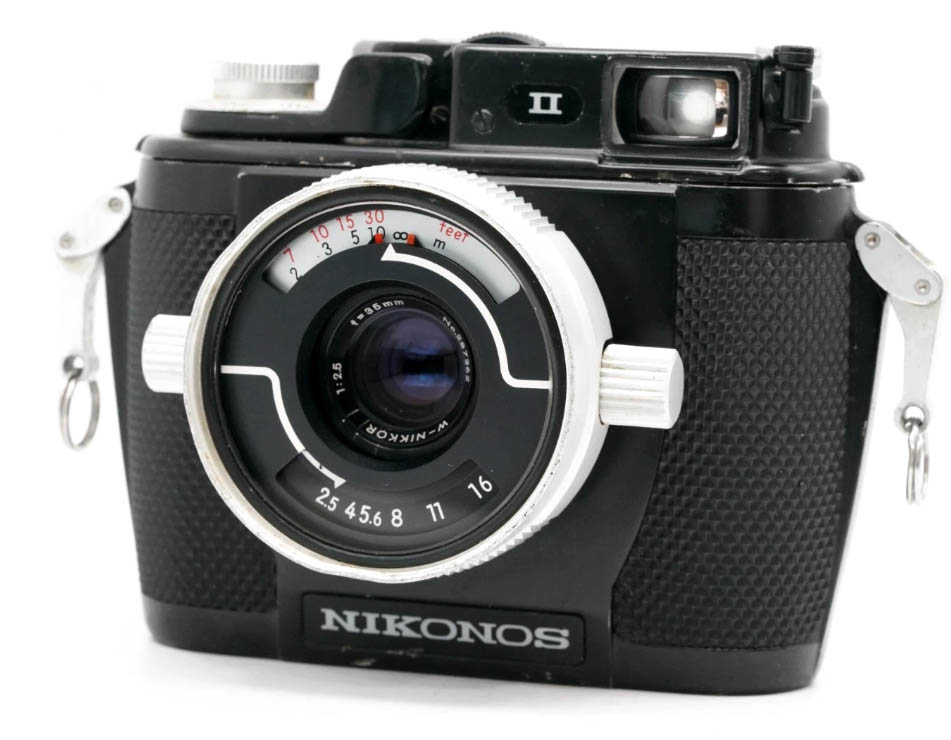
By the early ’70s, cameras like the Nikonos II began to change the landscape. These rugged, fully mechanical 35mm cameras could trigger flashbulbs underwater—an astonishing leap forward at the time.
But they offered no automation. No batteries. No forgiveness.
Every setting had to be dialed in by hand. Shutter speed was fixed around 1/50th of a second when using flashbulbs, but everything else—focus, aperture, distance—was a puzzle the photographer had to solve before pressing the shutter.
Focusing was done by estimation, not sight. You measured distance by eye or by feel, then twisted the lens to match. The scale was sparse and nonlinear, so precision came only with experience.
Exposure was even trickier.
Exposure as Math, Not Guesswork
Without through-the-lens metering, photographers relied on guide numbers printed on flashbulb boxes. These numbers linked the bulb’s brightness to the film’s sensitivity. The formula was simple:
Aperture = Guide Number / Distance in meters
But underwater, “simple” didn’t mean easy. Every shift in distance meant recalculating the aperture. There were no electronic calculators, and dividing in your head, a 4 digit guide number by the distance to the subject, took some serious concentration. Mistakes meant wasted film—film that wouldn’t be developed for days or weeks.
Slide film made the stakes even higher. Its narrow exposure latitude meant you either nailed the shot or lost it entirely.
The Enemy That Never Slept: Silt
If darkness was the first challenge, silt was the most relentless. Even the slightest disturbance could send clouds of fine particles drifting into the water column. When hit by a flash, these particles reflected light back into the lens, creating a blizzard of white specks known as backscatter.
A single careless fin kick could ruin an entire series of shots.
Photographers learned to move with near‑surgical precision. They hovered, glided, and planned every motion. They thought not only about composition, but about how the water around them would react.
Rethinking Light Itself
Early attempts used a single flash mounted near the camera. The results were predictable: a bright foreground of illuminated silt and a background swallowed by darkness.
The breakthrough came when Glenn realized the problem wasn’t the amount of light—it was the location of the light.
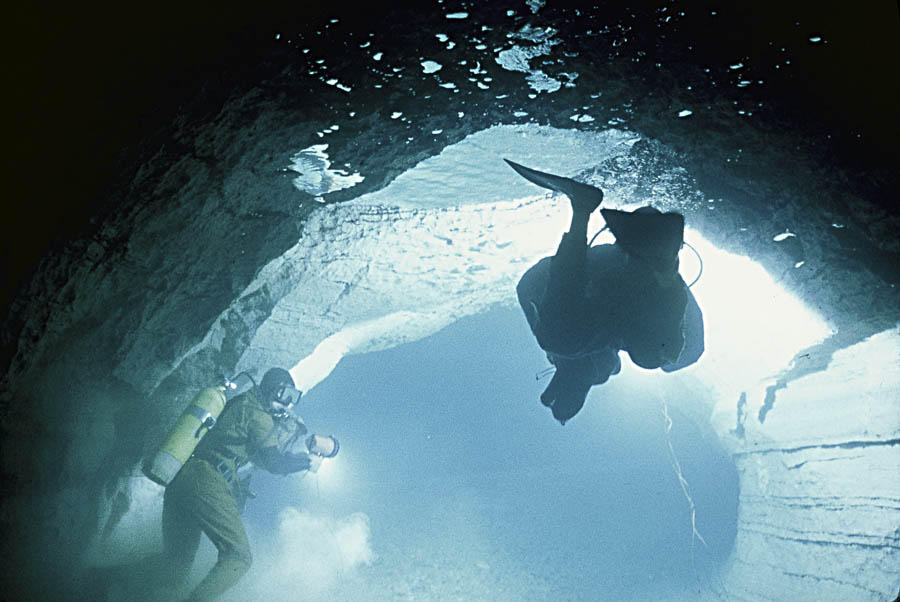
By moving the flash away from the lens, he could illuminate the scene without lighting the silt directly in front of the camera. This insight sparked a wave of improvements.
Glenn built his own remote flash systems using speaker wires soldered into a spent flash bulb base so it would fit into the flashbulb socket on the camera and then attached the wires to flashbulb holders/reflectors at 40 feet and at 80 feet. Assistants swam ahead carrying these remote flashes, keeping them aimed at the cave walls and reloaded every time a flash went off as they swam ahead carrying these remote flashes, positioning them like stage lights in a submerged theater.
When the shutter fired, the bulbs exploded in brilliant white light, illuminating vast chambers. Then, in total darkness, assistants replaced the spent bulbs by feel alone.
This was the moment cave photography truly began to work.
Working Blind, Learning Slowly
There was no way to review images underwater. No LCD screen. No instant feedback. Photographers surfaced, dried their gear, logged their settings, and waited—sometimes a week or more—for the film to be developed.
Each roll of film became a lesson. Each mistake became a data point. Progress was slow, but steady.
A Dive as a Choreographed Performance
A typical photography dive was a carefully orchestrated operation:
- Cameras were prepared and checked.
- Focus distances were pre‑set.
- Exposure strategies were chosen in advance.
- Divers positioned themselves at exact distances.
- Assistants carried and aimed remote flashes.
- Only one or two frames were taken at each location.
Film was precious. Air was limited. Every shot mattered.
Risk as a Constant Companion
All of this unfolded in an era when cave diving itself was still evolving. Equipment was less reliable. Safety protocols were still being written. Adding cameras, wires, and experimental lighting systems increased the complexity—and the danger.
But these constraints didn’t stop the photographers. They pushed forward because the caves demanded to be seen.
Inventing a Visual Language
What makes this era remarkable is not just the images that survived, but the process behind them. Every successful photograph represented a chain of correct decisions made in an environment that offered no second chances.
Focus was estimated. Exposure was calculated. Light was constructed from scratch. And the outcome remained unknown until long after the dive was over.
From these constraints emerged the foundations of modern cave photography. Techniques that are now standard were once improvised solutions, developed by individuals working at the edge of both exploration and possibility.
They were not simply documenting caves—they were figuring out how such documentation could exist at all.