Life on Hundred Acre Pond
During his junior and senior years at the University of Rhode Island, Glenn Thompson traded the typical college dorm for something far more atmospheric: a small cottage perched on the edge of Hundred Acre Pond. He shared it with three housemates, and together they lived in a place shaped as much by ancient geology as by youthful recklessness.
Hundred Acre Pond—like many lakes scattered across Rhode Island—owes its existence to the retreat of glaciers thousands of years ago. As the ice sheets melted, they left behind massive buried chunks that eventually dissolved into deep, still basins known as kettle-hole lakes. These waters, often plunging 35 to 50 feet deep, became year-round playgrounds: swimming and boating in the summer, ice skating in the winter. But recreation here always came with an edge.
Skating on Uncertain Ice
Winter transformed the pond into something both inviting and dangerous. By late season, the ice could thicken to six or seven inches, but the real temptation came earlier—when the surface first froze into a smooth, glass-like sheet of “black ice.”
It was perfect for skating. It was also unknowable.
Each step onto the lake carried a quiet calculation: Was the ice thick enough? The sound of cracking—sharp, echoing across the frozen water—blurred the line between natural expansion and imminent collapse. There were no guarantees. Only signals. A heavier skater venturing out might embolden others. A cluster of people could become reassurance.
But someone always had to go first.
And that first glide across untouched ice required a particular kind of courage—the kind that accepts, even momentarily, the possibility of disappearing beneath the surface. The reward? Absolute solitude. An entire frozen world, yours alone.
Building Speed (and Sinking Fast)
Living on a lake sparked ambition. For Glenn and one mechanically inclined roommate, simply admiring the water wasn’t enough—they wanted to conquer it. Specifically, they wanted speed.
So they built a boat.
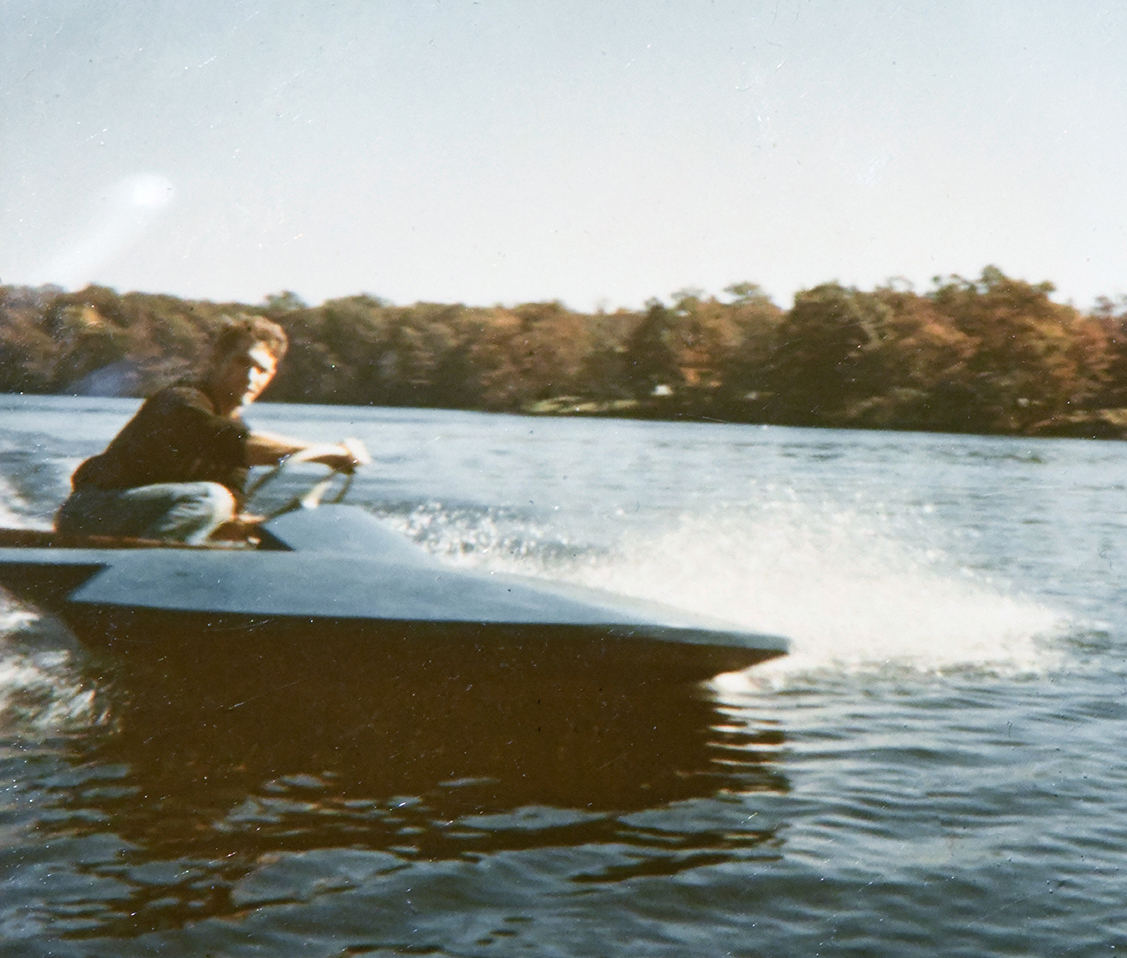
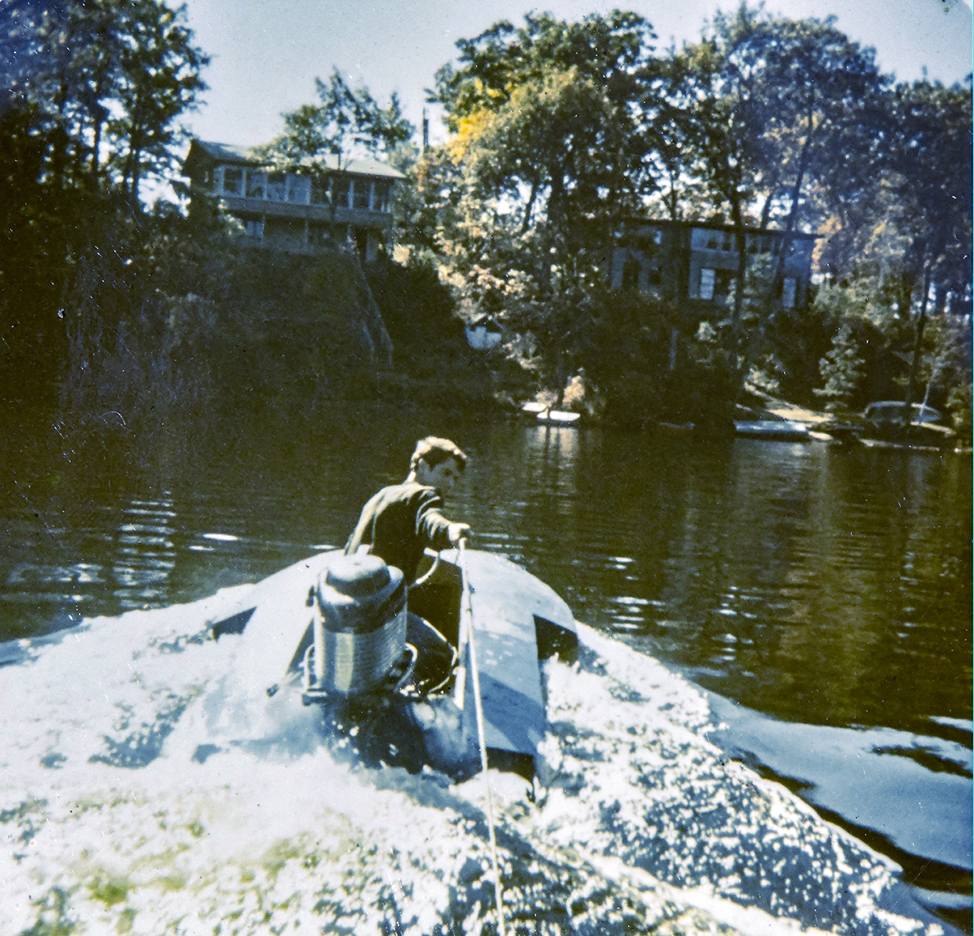
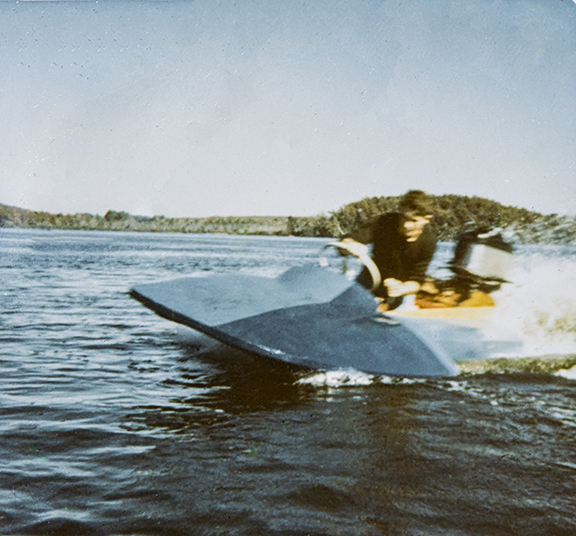
Not just any boat, but a homemade hydroplane: eight feet long, four feet wide, constructed from wood and fiberglass, with a steering wheel and throttle mounted at the front. Designed to skim the surface on just three contact points, it promised exhilarating velocity. A refurbished 40-horsepower Mercury outboard motor provided more than enough thrust. To guard against disaster, they packed the hull with Styrofoam, ensuring it would never sink.
At least, not completely.
After a successful first lap around the lake, Glenn decided it was time for a demonstration—complete with a date in the passenger seat. The early moments went smoothly. Half throttle felt fast. Three-quarters throttle felt thrilling.
Full throttle was something else entirely.
The boat responded by plunging nose-first into the water, sending a wave crashing over them, flooding the cockpit, and killing the engine instantly. Soaked and silent, they drifted in the aftermath of a perfectly avoidable design flaw: the motor had been angled in a way that forced the bow downward under acceleration.
The Styrofoam kept them afloat. Pride did not fare as well.
It took over half an hour to paddle back. The mechanical fix was simple. The social recovery was not. Glenn never asked her out again.
Surfing the Frozen Lake
If summer brought speed, winter invited experimentation—sometimes fueled by more than curiosity.
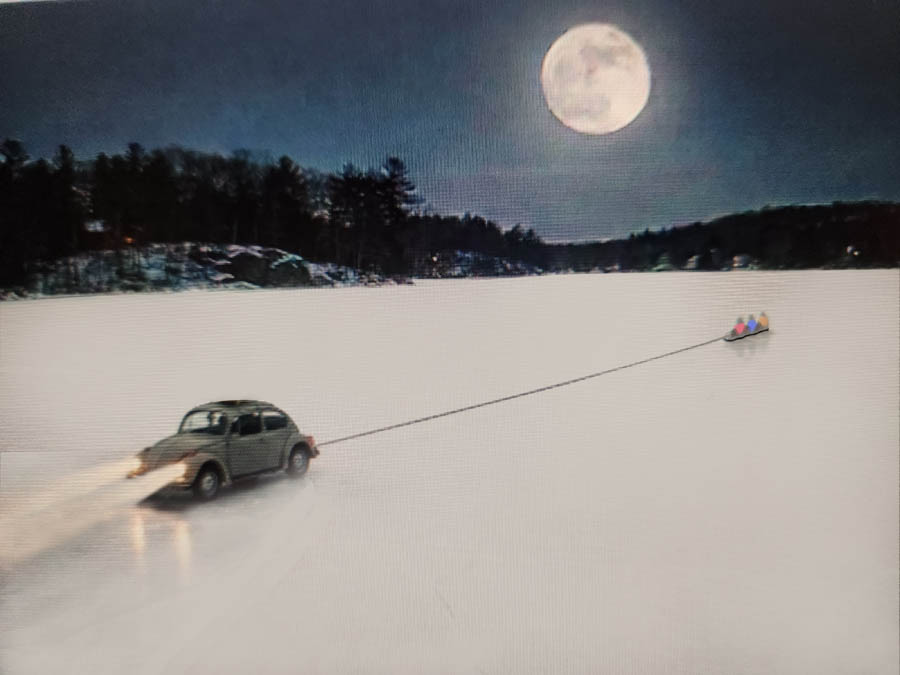
One night in 1968, under a bright full moon and after a generous amount of “liquid refreshment,” Glenn and his housemates devised a plan: they would tow a surfboard across the frozen lake using a car.
It made a certain kind of sense.
They had seen ice fishermen drive vehicles onto frozen lakes before. The equipment came together easily: a small Volkswagen Beetle, a surfboard with its fin removed, and a long rope to distribute weight across the ice. Glenn, the lightest at 125 pounds, took the wheel.
Getting onto the lake was the first challenge. The ice near the shore was dangerously thin due to warmer groundwater, but after a cautious approach down the boat ramp, they reached safer territory. The night was bright, the ice glowing under the moon, shadows stretching across the frozen expanse.
They began.
The car accelerated, pulling the surfboard and its riders across the ice at 20 to 25 miles per hour. The surface protested with sharp, popping cracks, but held. Then came the turn.
As Glenn steered into a gradual arc, the surfboard swung outward, tension building in the rope. What followed was less a turn than a transformation: both car and board lost forward motion and began rotating sideways, locked into a shared orbit around a single point on the ice.
The physics took over completely.
The rope stayed taut. The car spun in a tight circle. The surfboard, far out on the line, whipped around at much higher speed, its riders clinging on against the growing centrifugal force. What felt like control had become something closer to surrender.
When everything finally stopped, the silence returned just as suddenly as the chaos had arrived.
It had been thrilling. It had been educational. It had also been enough.
They never tried it again.
Into the Edge of Youth
Life on Hundred Acre Pond wasn’t just a backdrop to Glenn Thompson’s undergraduate years—it was a proving ground. A place where curiosity blurred into risk, where ingenuity collided with inexperience, and where every adventure carried a quiet question:
How far can you go before something gives way?
Ice cracks. Boats dive. Cars spin. And yet, in those moments balanced between control and collapse, something else emerges—a sharper awareness, a deeper memory.
Not just of what happened, but of how close it came to going differently.
And that, perhaps, is where the real story lives.