
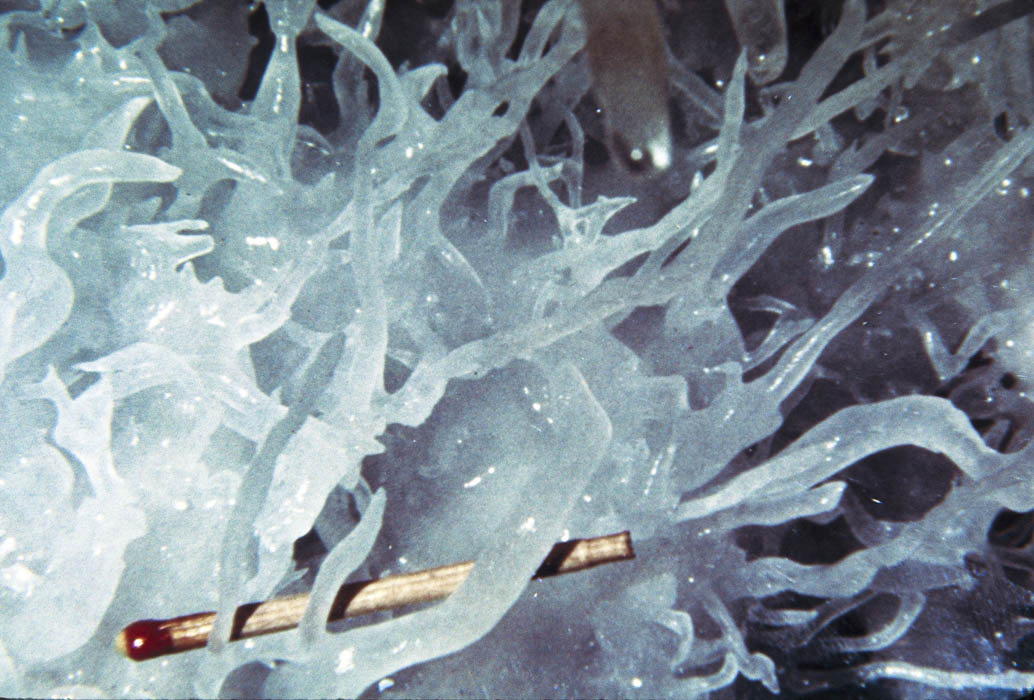
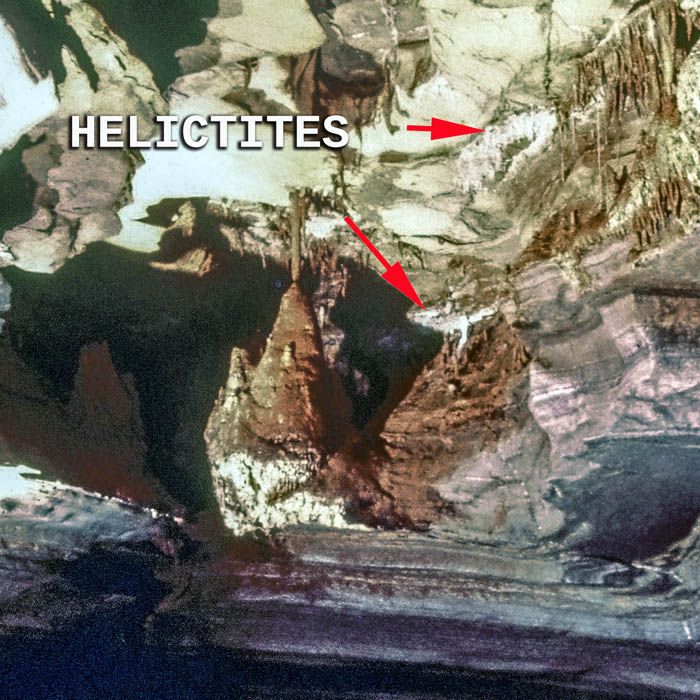
Helictites are among the most mysterious and visually striking formations found in caves. Unlike stalactites and stalagmites, which grow predictably downward or upward due to gravity, helictites seem to defy those rules entirely. They twist, curl, and branch in all directions, forming delicate, gravity-defying shapes that have puzzled scientists and cave explorers for decades. How do these formations grow in such unusual ways?
Traditionally, explanations focused on physical processes like capillary forces, airflow, or impurities in the water guiding mineral deposition. While these factors do play a role, more recent research suggests that biology may be an important—and previously overlooked—piece of the puzzle.
A fascinating study conducted in Asperge Cave in France has provided strong evidence that helictites may form through biologically mediated processes. In this research, scientists performed a detailed molecular analysis of the organic material present on helictites. What they found was surprising: a biofilm closely associated with the mineral structure of the speleothems.
This discovery opens up a new way of understanding helictite growth. The researchers proposed that the biofilm could influence how crystals form on the helictite surface. Specifically, the biofilm may block certain crystal nucleation sites while allowing others to remain active. By selectively controlling where crystals can grow, the biofilm could effectively guide the direction of mineral deposition. This mechanism provides a compelling explanation for the seemingly erratic and intricate shapes of helictites.
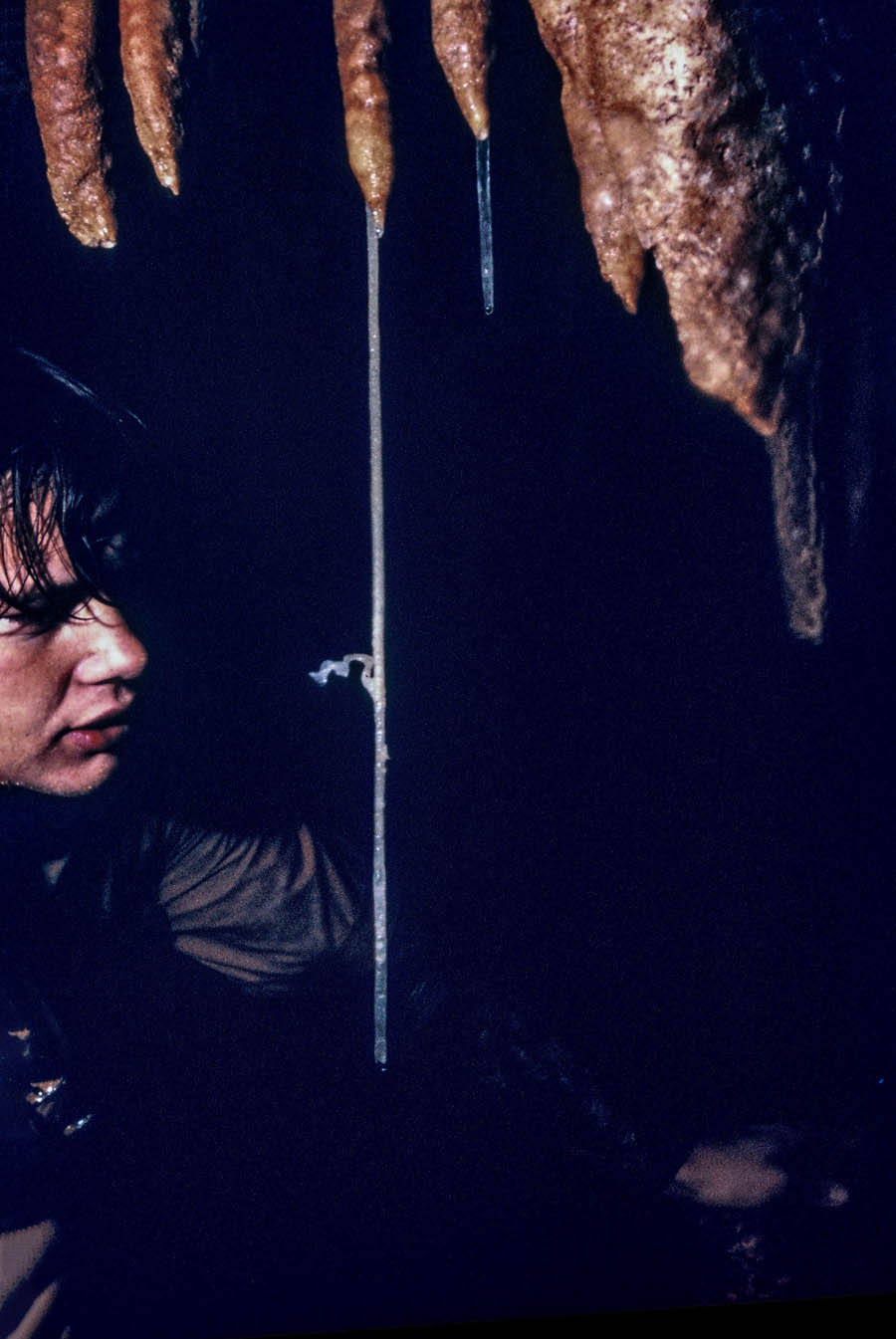
In simpler terms, instead of being shaped purely by physics, helictites may be partially “sculpted” by microscopic life forms. The presence of this thin organic layer introduces a level of biological control over what was once thought to be a purely geological process.
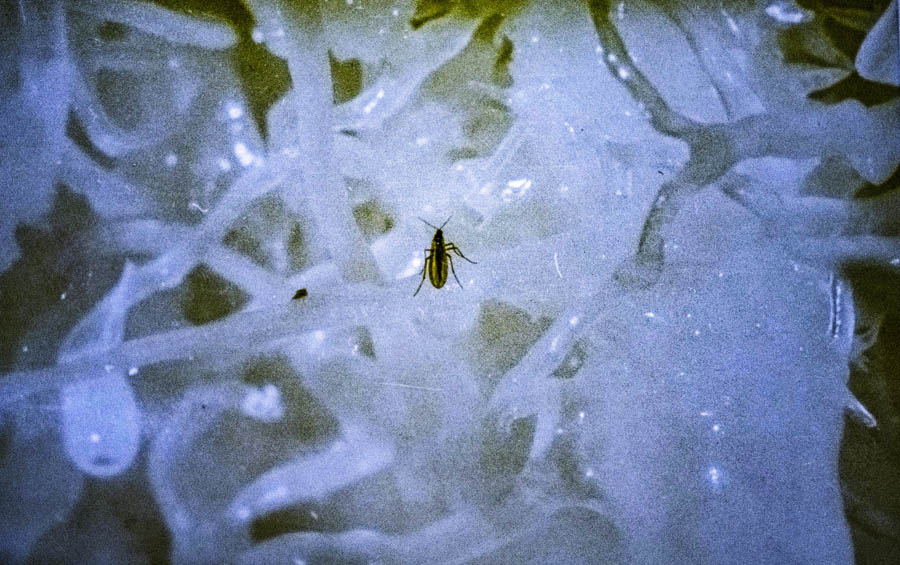
Taking this idea a step further leads to some intriguing possibilities. If organic matter exists as a microscopic film on the surface of helictites, it could also play a role in interactions with other organisms. For example, such a biofilm might attract small cave-dwelling insects or microorganisms looking for nutrients. One could imagine a scenario where a fly, drawn by the presence of organic material, lands on a helictite to feed. While speculative, this idea highlights how even the most delicate cave formations might be part of a subtle ecological network.
Ultimately, the study of helictites reminds us that nature rarely fits into neat categories. The boundary between geology and biology is often more intertwined than it appears. These twisting cave formations are not just mineral curiosities—they may also be records of microscopic life influencing the underground world in ways we are only beginning to understand.
Step into the darkness... if you dare.
Beneath the surface lies a world of hidden passages, ancient formations, and mysteries that continue to challenge science. Into the Absolute Darkness explores the fascinating geology, history, and unanswered questions surrounding some of the world’s most incredible cave systems.
Whether you’re a cave enthusiast, mystery lover, or simply curious about what lies beneath our feet, this book will take you on an unforgettable underground journey.
Order your copy today on Amazon: