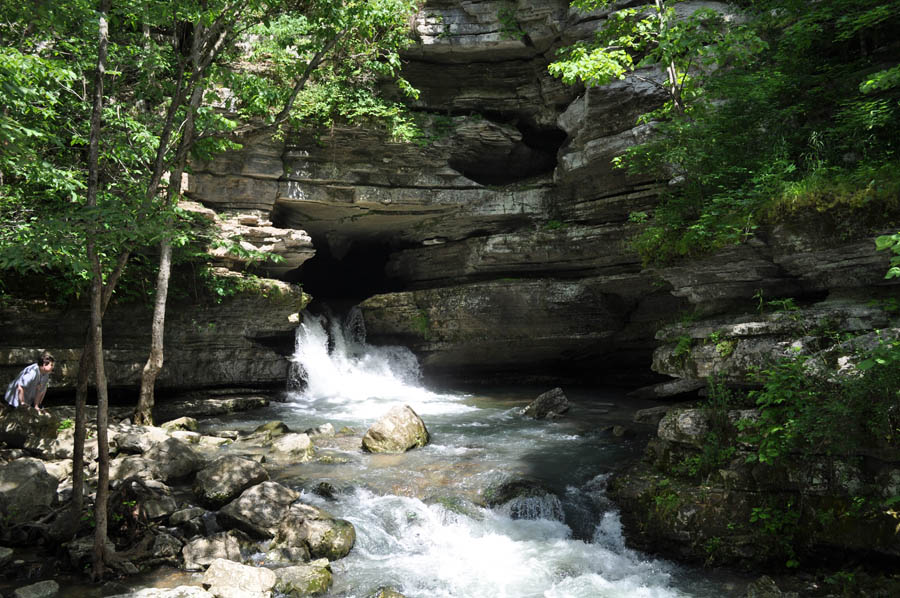
For decades, the residents of Fifty-Six, Arkansas, were captivated by a geological puzzle. They knew that the water flowing from Blanchard Spring originated a mile away within the Blanchard Springs Caverns, but a simple test in the 1950s—tossing corn husks into the cavern stream—revealed a mystery. While the water in the cave flowed at ten to fifteen feet per minute, it took twenty-four hours for the husks to emerge at the spring. But considering the water velocity observed inside the cave, it should have come out in about 3 hours. Where was the water going, and what was it doing for those additional twenty-one hours?
In 1971, a twenty-four-year-old graduate student named Glenn Thompson and his partner Bob Langford set out to find the answer
Entering the Abyss
While the U.S. Forest Service was busy preparing the main caverns for tourism, Thompson and Langford decided on an audacious back-door approach: they would enter through the spring itself. At the time, entrance to the Spring was not prohibited because there was no need to prohibit it. Cave diving was unheard of in inland areas. All the cave diving in the US took place in the big clear springs of Florida at that time. No one had yet dared to navigate the spring’s output against the current.
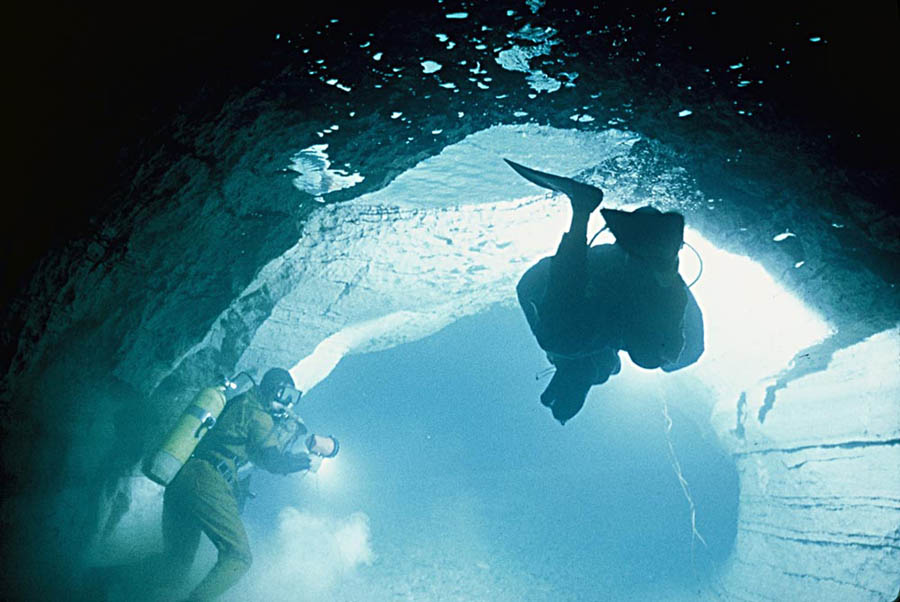
The explorers faced immediate physical challenges. The water was a constant, bone-chilling 57 degrees Fahrenheit. Thompson, who had honed his skills diving in the freezing waters of Rhode Island, used his experience to push into what was known as “The Siphon”, a low spot or underwater passage—where the cave ceiling dipped below the water table, and becomes completely flooded tunnel.
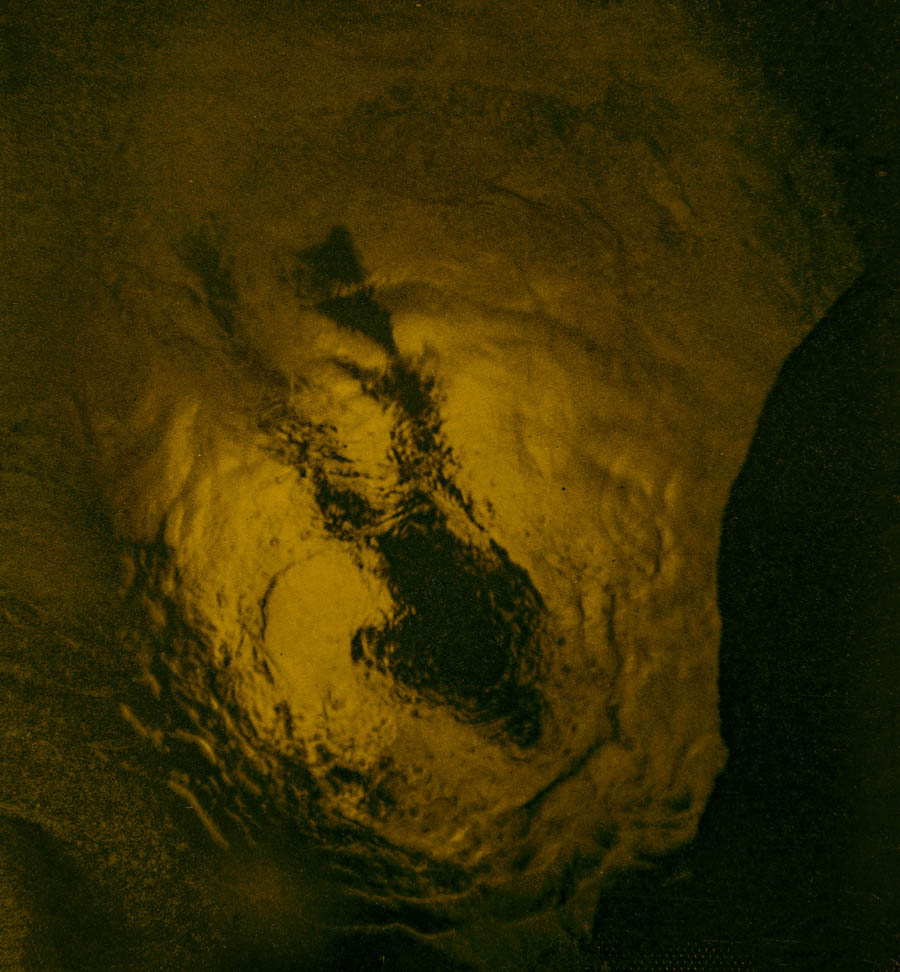
The First Breakthrough: Lumsden Falls
The first solo foray into the first underwater passage known as The Siphon was an extremely frightening moment for Thompson due to the danger of diving into a totally dark, underwater cave where it is not possible to reach an air surface in the event of an emergency. Virtually any problem at all could cost him his life. To make matters worse on this day of his arrival at the Spring, the discharge was at max flood flow, and the water was extremely muddy. His only choices were to make the dive despite unusually bad conditions or make the 6-hour round trip from Memphis to Mountain View and back…. for nothing.
He chose to dive. Using a lifeline held by a shivering Langford (who lacked a wetsuit at the time), Thompson entered the dark, flooded tunnel. To add to his apprehensions in this dark tunnel, he could hear a rumbling noise that became louder as he moved further into the tunnel. He had only 5 inches of visibility with his flashlight in the muddy water.
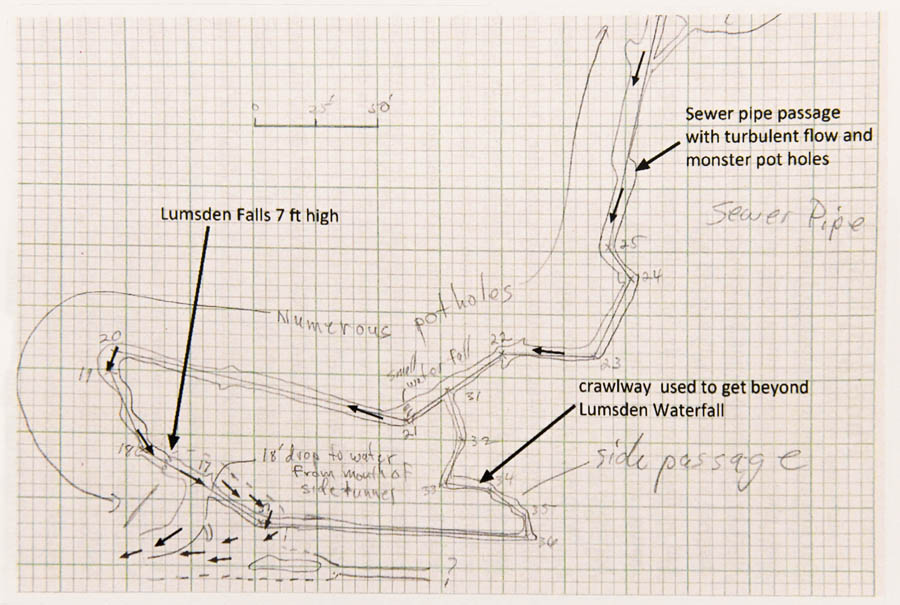
Luckily, his 200-foot life line enabled him to reach an air-filled room at the far end of the siphon tunnel. As his head cleared the surface of the water, the rumbling noise he had been hearing suddenly became deafening roar. I giant river of water was shooting out of a cave passage to his left, about 7 feet above his head, It was a monumental discovery! A giant waterfall had existed for thousands of years hidden inside this mountain and he was the first human to see it!
Mapping the Hidden Watercourse
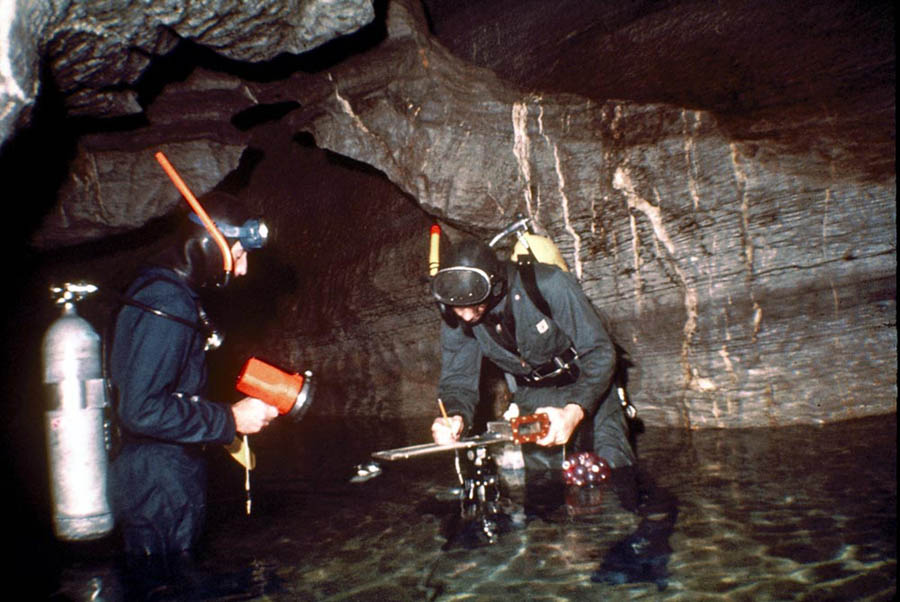
Several months and about 6 more explorational trips later into the spring, The project gained official status when the U.S. Forest Service and Memphis State University (now the University of Memphis) validated their “audacious escapade” and contracted them to explore, map, and photograph the entire watercourse.
Mapping was a grueling process that required:
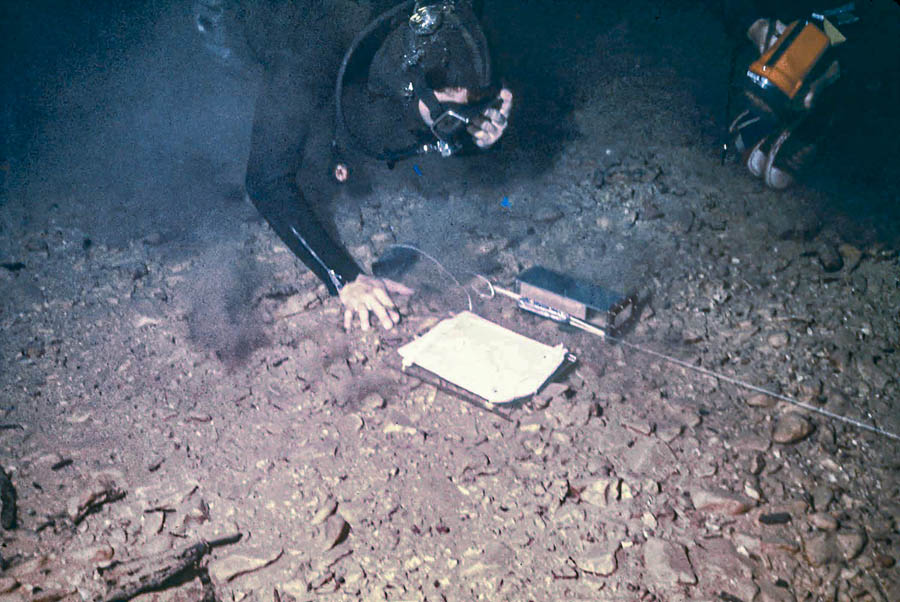
- Navigating “The Siphon”: Pushing through zero-visibility silt clouds where the ceiling was so low it required dragging scuba tanks by hand.
- The By-pass Tunnel: Crawling on bellies through a dry, 27-inch diameter tunnel for twenty minutes to get around the impassable waterfall.
- Improvised Lifelines: On one harrowing night, they were forced to use a too-short string to pull a single scuba tank back and forth between them to survive a flooded passage.
Scientific Legacy
The expedition was more than just a series of “near-death experiences”; it provided the foundation for significant scientific research. The mapping efforts revealed that the long travel time for the corn husks was due to large, hidden air-filled rooms and large diameter underwater sumps where the water moved much slower than in the shallow free-surface cave stream.
Furthermore, the team’s work led to the study of stalagmites within the caverns. By using uranium-series dating, Thompson eventually determined that some of these formations were 786,000 yrs old plus or minus120,000 yrs, providing a rare window into the paleoclimate conditions existing northern Arkansas during the Pleistocene Ice Age.
Today, the maps created by Thompson and Langford remain a testament to a time when two “crazy young men” with a single tank and a bit of luck became the first humans to explore the absolute darkness hidden beneath the Ozarks
Copyright © Glenn Thompson – Into The Absolute Darkness