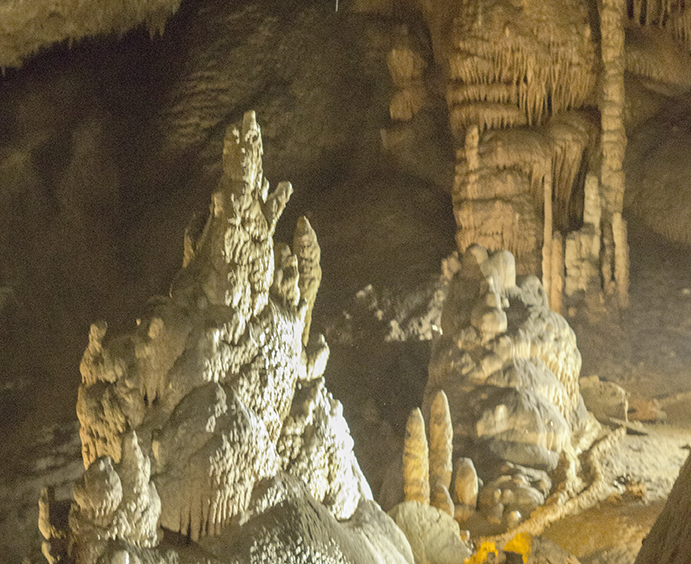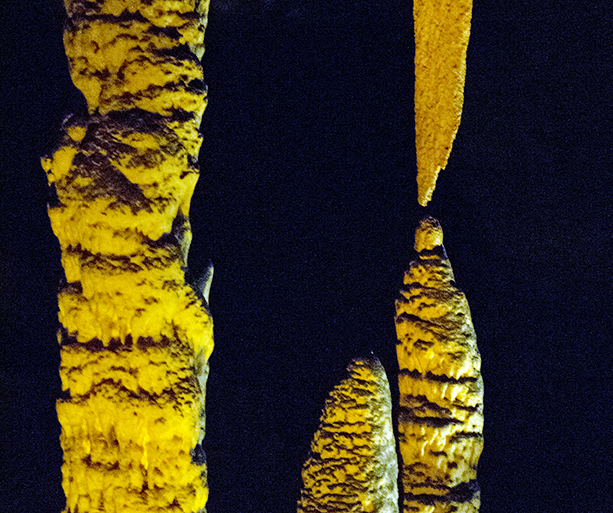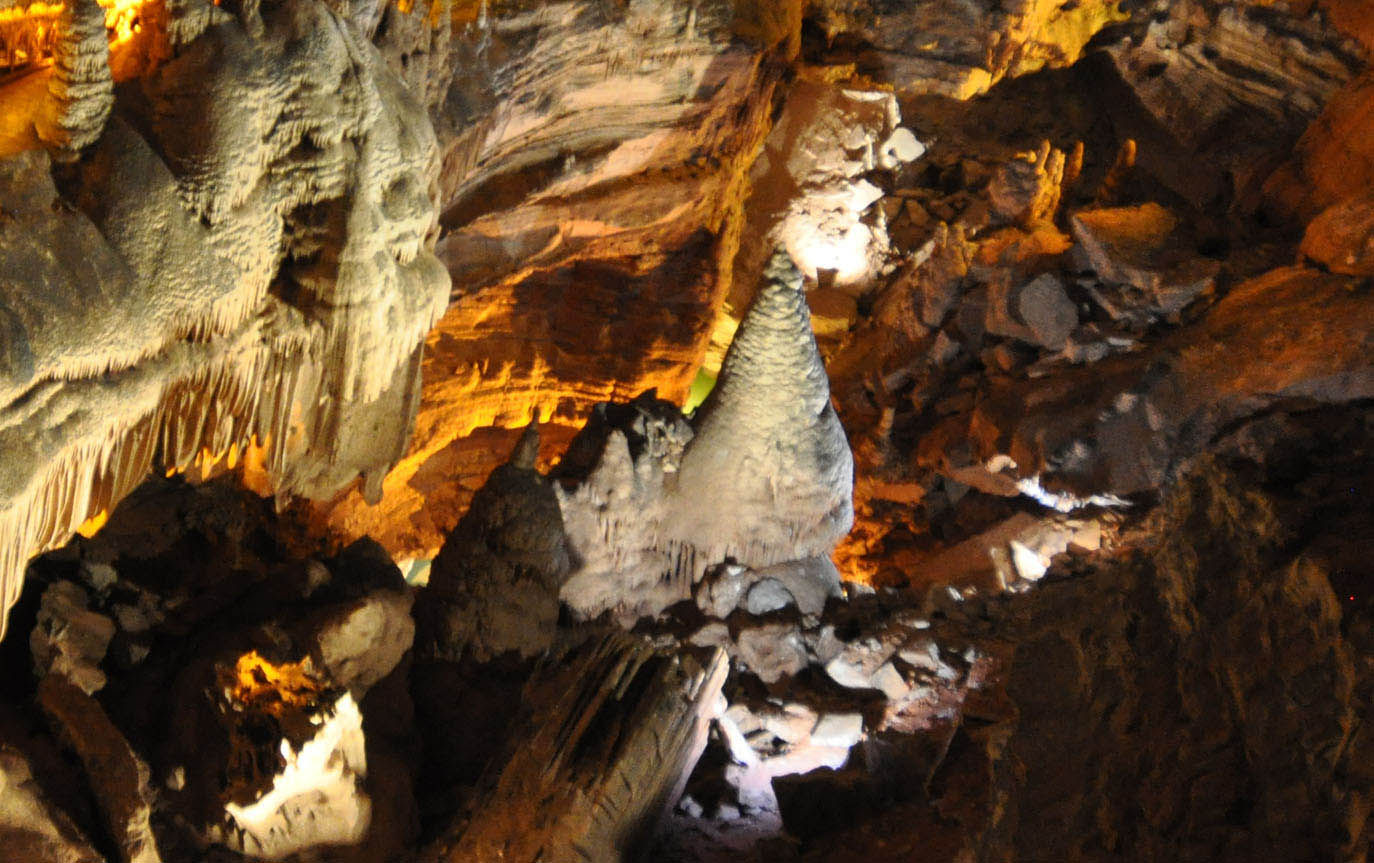
Stalagmites are more than just pretty cave formations; they are ancient time-travelers. Scientists have figured out how to use the “radioactive clocks” hidden inside them to determine exactly how old they are and how the environment has changed over hundreds of thousands of years.
The Two Ways to Tell Time
Because stalagmites are made of minerals leached from the earth by water, they contain tiny amounts of uranium. Scientists use two main methods to read these clocks:
- The Th-U Method: This measures how much “thorium” (a byproduct of uranium decay) has built up inside the rock. It’s great for dating “younger” rocks up to 350,000 years old.
- The Uranium Ratio Method: This looks at the balance between two different types of uranium. This method of dating, capable of reaching back 1.5 million years.
A 650,000-Year Life Story
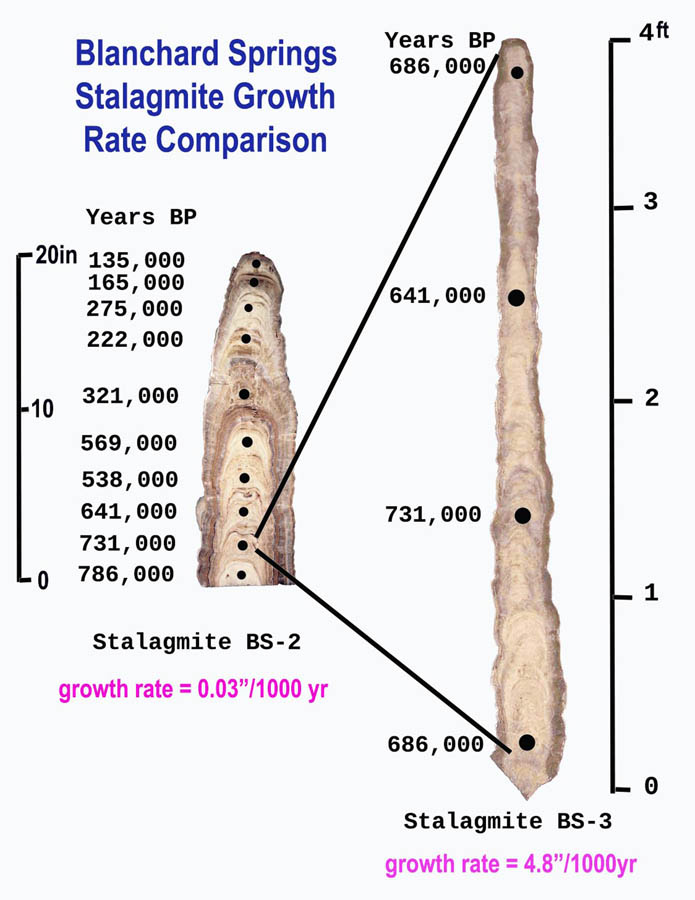
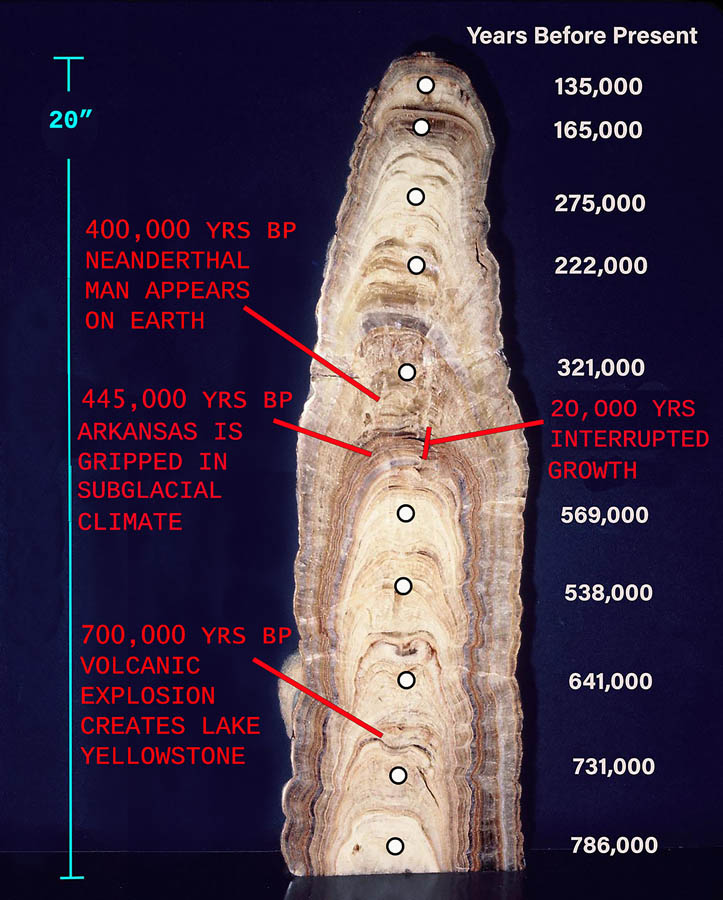
Researchers at Blanchard Springs Caverns focused on a specific stalagmite labeled BS2. Here is what they discovered about its life:
- Total Age: It grew over a period of about 786,000 yrs old plus or minus120,000 yrs.
- The Long Nap: The rock didn’t grow at a steady pace. It actually stopped or grew extremely slowly (445 yrs ago according to my dates) corresponds approximately to the time 437,000 ago of maximum cold temperatures of the the Great Pleistocene Ice Ice age when year-round freezing temperatures would halt all cave formation processes for thousands of years. That maximum glacial cold period also corresponds to the time of the Lowest Global Sea Level 445,000 yrs ago. That is because when the most ice was on land, the least water was in the oceans. Having 2 independent methods of measuring the glacial maximums helps give confidence in the accuracy of the dating method..
- Physical Proof: Scientists found “scars of interrupted growth” in the rock, like dark rusty layers and small holes, which matched the periods when the radioactive clocks said growth had stopped.
Why Isn’t This Easy?
If it sounds like a perfect science, there are a few “catches” that make it tricky:
- Guessing the Start: To know how old a rock is today, you have to know what the water was like when the rock started forming. Since we can’t go back in time, scientists test modern cave water to make their best guess.
- Leaky Clocks: Over hundreds of thousands of years, atoms can actually “move” or be washed out of the rock, which can mess up the reading.
- Margin of Error: Because of these factors, the dates can sometimes be off by as much as 120,000 years.
The Big Picture
Despite the challenges, the study proved that older, slow-growing stalagmites are surprisingly reliable. They give us a rare look into a world that existed long before humans began recording history.